

Car Servicing Explained: What You Really Get for Your Money
Everyone knows regular car servicing is important. But what actually happens during a service? And more importantly, what are you paying for?
You drop your car off, chat with the service adviser, then come back later to pick it up. Your car looks the same and probably drives the same. So what did the service really involve?
Types of Car Servicing: What’s the Difference?
There are several common types of car servicing:
-
Oil Service: The most basic type, usually involves changing engine oil and filter. While good for your engine’s internals, it often overlooks the rest of your vehicle’s maintenance and safety needs.
-
Minor Service: Includes an oil service plus safety and mechanical checks.
-
Major Service: Builds on the minor service with extras like air filter replacement, spark plugs, and fluid flushes (engine coolant, brake fluid).
Manufacturers used to recommend minor and major services at fixed intervals, but that system has mostly been replaced by log book servicing.
What is Log Book Servicing?
Modern cars are complex machines with components requiring maintenance at different times. These intervals depend on distance, time, or both, and vary by make, model, and sometimes even manufacture date.
A typical log book service schedule might look like this:
-
Every 10,000 km or 12 months: Oil and filter change plus 30-point safety checks.
-
Every 20,000 km or 24 months: Oil and filter, air and cabin filter changes, plus same safety checks.
-
Every 40,000 km or 48 months: Includes coolant and brake fluid changes and a more comprehensive check (35+ points).
This targeted approach ensures the right work is done at the right time to keep your car in peak condition.
Why Quality Servicing Matters
Like most things in life, you get what you pay for. While some workshops offer cut-price servicing, it usually means less time spent inspecting your car’s critical safety and mechanical components.
Your car is probably one of your most valuable assets after your home. You rely on it for safe, reliable transportation. Do you want a rushed service with minimal checks? Or would you prefer a thorough inspection that gives you peace of mind?
What We Do Differently at The Torque Team
At The Torque Team, every service includes:
-
At least 90 minutes dedicated to thorough inspection.
-
A test drive before and after servicing to detect any issues.
-
Comprehensive safety and mechanical checks beyond just oil changes.
This commitment ensures your car is properly maintained, safe, and reliable every time you drive.
Final Thoughts
Understanding the different types of car servicing and the value of quality work can help you make smarter choices for your vehicle. Don’t just settle for a quick oil change. Invest in comprehensive servicing to keep your car running smoothly, safely, and efficiently for years to come.
So, to keep your car in top condition, a car maker might specify that every 10,000 km or 12 months, your mechanic should change your engine oil and filter and carry out a specific list of checks; every 20,000 km or 24 months your mechanic should change your air filter and cabin filter and do the same checks, and every 40,000 km or 48 months, change your engine coolant and brake fluid and carry out a more comprehensive list of checks. These specifications are then consolidated into a service schedule. Using this as an example, we’d get the following:
- 10,000 km or 12 month log book service: engine oil and filter and check over 30 items.
- 20,000 km or 24 month log book service: engine oil and filter, air filter and cabin filter and check over the same 30 items.
- 30,000 km or 36 month log book service: Just an engine oil, filter and checks again.
- 40,000 km or 48 month log book service: Engine oil and filter, air and cabin filter, engine coolant, brake fluid and a more comprehensive list of checks covering say 35 items.
This is why we recommend log book servicing, even for older vehicles. This approach makes sure the right work is done at the right time to keep your car in top condition.
The final point to remember is that like most things in life, with servicing you get what you pay for. While every independent workshop is different, we all have much the same overheads and pay our techs around the same wages. So a workshop offering cut-price servicing has to turn over more services in a day to make a profit. Therefore, low service prices can only mean one thing: less time for the tech to check over the critical safety and mechanical components on your car. Think about that. Your car is probably the most expensive asset you own after your house. You rely on it to get you where you need to go and to keep you and your family safe while you get there. Are you happy for a tech under severe time pressure at a cut-price workshop to spend just a few minutes checking it over? Or would you prefer to pay a bit extra to get the job done properly?
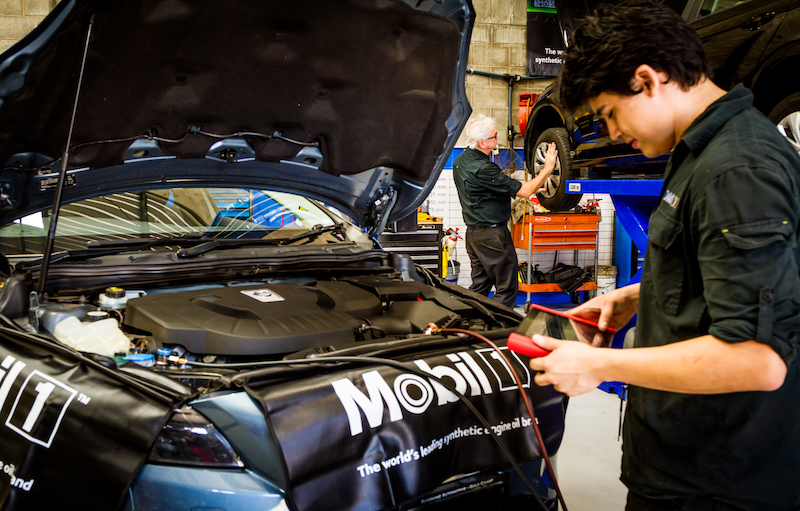
At The Torque Team, we spend AT LEAST 90 minutes on each service. And we test drive the car both before and after every service. This gives our techs the time they need to thoroughly check over and test your car, so you can drive away with the confidence that comes from knowing your car is being properly maintained.